
How Healthy is the HWV?
Overall, the HWV is a fairly health breed, and is currently listed as a category 1 breed (no points of concern) by The Kennel Club under its Breed Watch Scheme. Breed Watch is a visual scheme that has been developed as an early warning system to allow judges, exhibitors and breeders to identify conformational faults that may become detrimental to health and welfare.
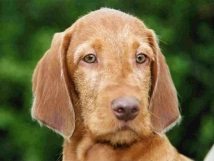
In 2022 The Kennel Club published “The Kennel Club HWV Breed Health and Conservation Plan” which collates over 2,000 responses to a HWV specific health questionnaire. The results give a good indication of the health of the breed as a whole, and a good basis to plan future measures to maintain the health and wellbeing of this breed. You can read more about the conservation plan here.
The HWVCGB has put together a short list of conditions that the HWV can be prone to, plus topics that are frequently raised by new and prospective owners:
Docking
The HWV, along with many other breeds, were customarily docked until April 2007 when the Government changed the Animal Welfare Act. Docking was originally done on welfare grounds – as this breed were bred to work over any terrain and in thick cover a long tail left them at risk of tail damage, which in severe cases could lead to amputation. Breeders are still legally allowed to dock puppies as long as they meet the UK government guidelines. For more information about docking you can visit the government website here.
Neutering
If your HWV is going to be a pet you may think about having them castrated or spayed. Please do not rush into this and weigh up the pros and cons.
Joints
It is important to take care of your puppy’s joints when they are young to ensure that they are able to live a long and active life, and to help prevent possible skeletal problems or arthritis in later down the line. Feeding puppies carefully to avoid accelerated growth, and limiting his or her exercise during their first year will help to ensure that they develop strong joints as they mature. Your breeder and your vet will be able to help you choose a suitable diet for your puppy that meets his or her needs as they grow into an adult dog.
The HWV is a fairly robust dog, but it’s so important to protect a puppy’s joints, therefore building up their exercise gradually is vital. As a general rule of thumb, 5 minutes walking for each month of the puppy’s age is about right, and take care to avoid any excessive jumping, including in and out of the car, until they are more physically mature.
Skin problems
Some HWV can be prone to skin complaints and allergies. Some common causes of skin problems are diet, parasites or unsuitable bedding. Ear complaints can also be linked to allergies.
Epilepsy
This condition has been identified in the HWV, however a responsible breeder should take great care not to introduce lines that are known to carry epilepsy into their breeding stock.
Weight gain
The HWV is naturally a very active and enthusiastic companion, so excess weight gain is not normally a problem associated with this breed, however it is worth bearing in mind that an overweight dog is often an unhappy and unhealthy dog!
Carrying excess weight limits the dog’s activity in the short term, and long-term obesity can lead to other health conditions. Suitable diet and exercise are the key points to consider to ensure your dog is fit and healthy, and stays that way throughout his or her life.
Bloat and torsion
Bloat is caused by excessive air in the gut and can affect any deep chested dog, including the HWV. Torsion is where the gut twists cutting off the blood and oxygen supply. Both of these conditions are life threatening, and must be dealt with as an emergency. If you are concerned that your dog has bloat or torsion, contact your vet immediately.
Ectropion and Entropion
Ectropion is where one or both eyelids turn outwards and Entropion is where the eyelids turn inwards. Again, these can affect many breeds of dog and so are not isolated to the HWV though the condition can occasionally be seen in HWV puppies.